

We speak to Dr. Carolyn Willekes about horses in antiquity: their development and domestication, their use in warfare, their training and breeding, and her many adventures riding horses across Greece, Turkey, Mongolia, and Canada.




Announcement: Online Course

Aven: Hi everyone. This isn't a regular episode of the Endless Knot podcast. Just a quick announcement.
Mark: I wanted to let you all know about something new that I'm doing: an online seminar series. It's basically a short course open to anyone, on the Speakeasy platform. The title is: "The origins of English: learning to think like an etymologist" and it's going to be four one-hour classes on zoom, in which, through a series of linguistic puzzles, we will follow in the footsteps of etymologists and historical linguists to reconstruct the relationships between languages and long forgotten roots of English words.
The class is limited to 12 people and starts on Thursday, March 4th, at 7:00 PM eastern time, running on the three following Thursdays at the same time. If you're interested, you can go to our website at alliterative.net, and there's a link to the Speakeasy page, where you can buy a ticket.
Or if you'd like to take part, but the timing doesn't work for you, you can leave Speakeasy a message about what would be better, and we'll try and take that into consideration when we schedule the next session. Because if this goes well, I'm hoping not only to be able to repeat it, but also do some different courses on Old English poetry, on the development of English from the early middle ages to today, and more
Aven: So if you think this sounds fun, please go to our website at www.Alliterative.net for more information.
Mark: Hope to get to meet you online sometime soon!
Episode 88: Meta-Etymology


We talk about the etymology of “Etymology” itself, and then discuss the basics of historical linguistics, including Grimm’s Law, Verner’s Law, and more. We also talk about Isidore of Seville, the etymological puns of Latin poets, and the way Mark does his research for his videos.
Isidore of Seville’s Etymologiae
This podcast is licensed under a Creative Commons Attribution-ShareAlike 4.0 International License


Episode 87: Alexander the Great, with Meg Finlayson


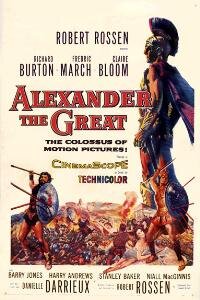
This episode is all about Alexander the Great, and especially about his reception by later Greeks & Romans, the middle ages, and modern popular culture. We had the pleasure of interviewing Meg Finlayson who studies Alexander and his reception and shared their knowledge, enthusiasm, and dreams of a new Alexander movie with Colin Farrell playing Philip!

Alexander mosaic
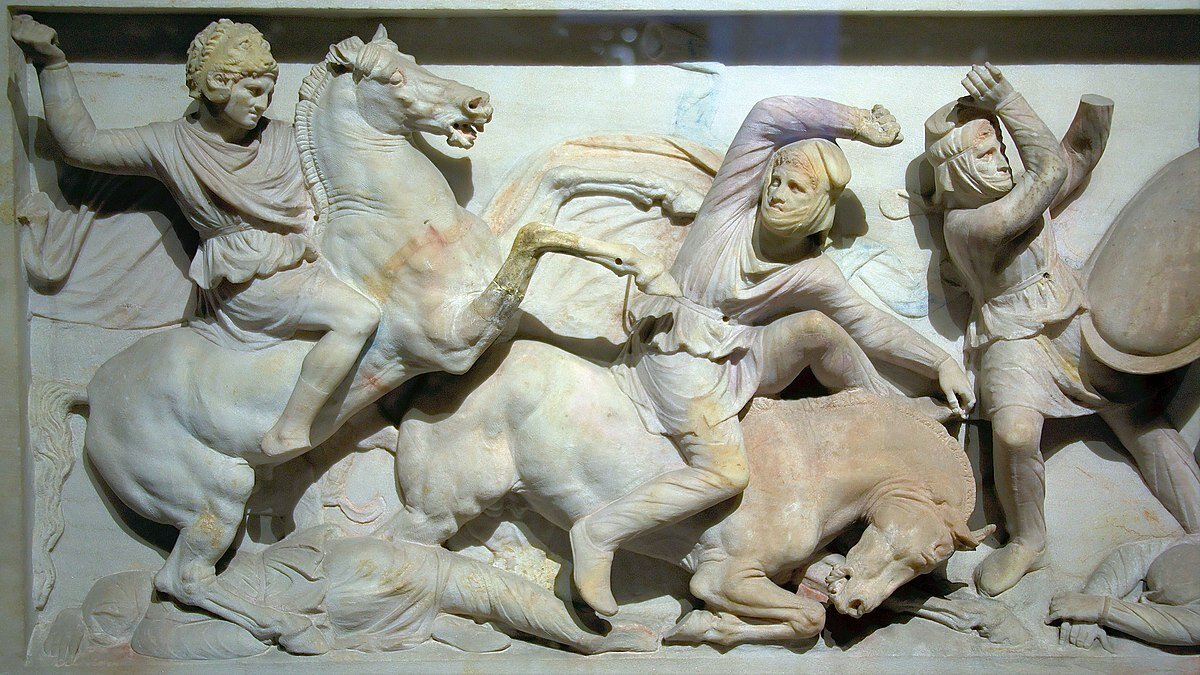
Alexander sarcophagus

Pompey “the Great”

Alexander the Great in his “submarine”


Meg’s twitter @agameganon
This podcast is licensed under a Creative Commons Attribution-ShareAlike 4.0 International License



Episode 86: Who's on Your Calendar?

Happy holidays! In this seasonal episode we discuss the origins of the modern Western calendar, the names of the months and days of the week, and the sources we have for Roman calendars and Germanic gods. Happy new year, and may it be better than the last!
Herbert-Brown, Geraldine. “Fasti: the Poet, the Prince, and the Plebs” in A Companion to Ovid, ed. Peter E. Knox, Wiley-Blackwell. 2013.
This podcast is licensed under a Creative Commons Attribution-ShareAlike 4.0 International License


Episode 85: Election Talk to Take Your Mind off the Election


It’s election night 2020 in the US, and our video from 4 years ago about the language of politics is relevant once again. We discuss the changing vocabulary of democracy and what it can tell us about shifting attitudes towards popular rule and politicians. It may not be a complete break from political coverage, but at least it’s mostly about the distant past, not the uncertain future!
Mashed Radish blog post on Candidate
Mashed Radish blog post on Poll
This podcast is licensed under a Creative Commons Attribution-ShareAlike 4.0 International License




Episode 84: Linoleum: It's Not As Boring As You Think!


In this episode we go from the origin of the world to the many uses of olive oil, with discussions of Roman mosaics, and trademark law along the way. This is the third of our episodes on Intellectual Property, following Episode 42: Bugging Out! on patents and Episode 57: Freebooting, Piracy, & Copyright on copyright. Also, it’s the start of Season 6, and we want to thank everyone who’s joined us over the last 5 years. It’s been a blast, and here’s to another half decade!
“The asàrotos òikos mosaic as an elite status symbol” by Ehud Fathy
Ancient History Encyclopedia — the olive
Oxford Dictionaries blog post on “gasoline”
Hesiod, Theogony
This podcast is licensed under a Creative Commons Attribution-ShareAlike 4.0 International License


Episode 83: Recipes and Authority, from Intelligent Speech


Back in June we had the pleasure of being part of the Intelligent Speech Conference 2020 — this year, held entirely online. It was a day filled with amazing podcasters and great conversations, and in this short episode we’re sharing the talk that we gave at the event. It’s about the word Recipe and early cookbooks, medicine, and women’s magazines. If you’d like to see the images that accompanied the presentation, you can watch the talk on YouTube, where the questions and post-talk discussion are also included.
This podcast is licensed under a Creative Commons Attribution-ShareAlike 4.0 International License




Episode 82: Plagues, with Moxie from Your Brain on Facts


It’s time for us to talk about plagues — ancient, medieval, literary, etymological, and psychological! We’re joined by Moxie from Your Brain on Facts for a very fun — if slightly disturbing — discussion of many aspects of historical plagues.
Gardner, H.H. Pestilence and the Body Politic in Latin Literature. 2019.
Episode 44: "Us" & "Them" in the Ancient & Anglo-Saxon Worlds
Episode 51: Race & Racism in Ancient & Medieval Studies, Part One: The Problem
Episode 52: Race & Racism in Ancient & Medieval Studies, Part Two: Responses
This podcast is licensed under a Creative Commons Attribution-ShareAlike 4.0 International License


Episode 81: The Rise (and Fall) of Skywalker


In an episode that was recorded in late May before the protests started, we took a break from COVID talk to give our thoughts on the final movie in the Star Wars saga. We discussed how it was similar to or different from ancient epic, medieval romance, and Icelandic sagas, but mostly we talked about the ways it failed to bring together the many threads of the Star Wars story.
Given current events, and the protests against police brutality and systemic anti-Black racism, we urge our white and non-Black listeners to continue their education on these subjects and, if you’re able, donate to support people fighting for justice. One good podcast series is “Seeing White” from SceneOnRadio, and there are anti-racism reading lists here and here; you can donate to Black Lives Matter or The National Bail Out Fund, or any of the many causes that need funds right now.
We also have two episodes on race and racism in medieval studies and classics; they’re several years old now, but may be of interest for thinking about issues of race in our particular fields, and the role our disciplines have played in supporting structural racism in Europe and North America. EPISODE 51: RACE & RACISM IN ANCIENT & MEDIEVAL STUDIES, PART ONE: THE PROBLEM and EPISODE 52: RACE & RACISM IN ANCIENT & MEDIEVAL STUDIES, PART TWO: RESPONSES.
Star Wars: Galaxy’s Edge: Black Spire Cookbook
This podcast is licensed under a Creative Commons Attribution-ShareAlike 4.0 International License




Episode 80: Runes and Early Writing Systems


We take a look at the history of runes and their connection to early alphabets and Germanic culture. Then we take a trip back to the Phoenician and Egyptian origins of the modern English alphabet, and talk about some of the earliest examples of Greek writing, in inscriptions, epic poetry, and myth. Also, introducing Lyceum, a new platform for educational podcasting!
The “Screaming Viking” cocktail
NativLang’s video Muslim Vikings & Magic Letters: The Odd History of Runes pt 1
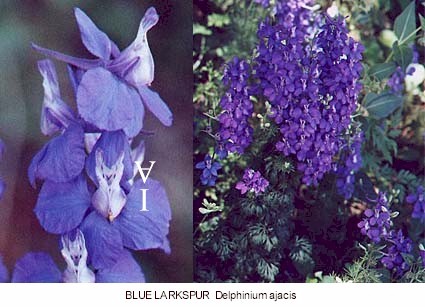
The story of Hyacinth (see under “Larkspur”) and images of possible “Ai Ai” flowers
“THE TEXT: Signs of Writing in Homer.” Homer: The Poetry of the Past, by ANDREW FORD, Cornell University Press, Ithaca; London, 1992, pp. 131–171. JSTOR.
This podcast is licensed under a Creative Commons Attribution-ShareAlike 4.0 International License


Episode 79: Sex & Gender

photo credit: Flickr user get directly down

We trace the etymologies and development of the words “sex” and “gender”, as well as words for women and men in Greek, Latin, and English, touching on Roman, Greek, and medieval English ideas about gender. Then we discuss the grammatical term “gender” and how it differs across languages around the world.
This podcast is licensed under a Creative Commons Attribution-ShareAlike 4.0 International License




Episode 78: An Etymological Holiday Feast


This year’s holiday episode is all about festivals and feasts — and in particular, midwinter celebrations, the solstice, and the seasons. And we read a couple of Latin poems about drinking — and explore the odd connection between them and a tire company!


Bonus Episode: Thorneloe Race Forum

This bonus episode contains two talks we gave at our university in November. Mark spoke about “The ‘Anglo-Saxon’ Problem: Language and Racism in Medieval Studies” and Aven spoke about “Defining ‘Race’ in the Ancient Mediterranean and Today”.
Google ngrams for collocations of “Anglo-Saxon”:
“Whitewashing Ancient Statues: Whiteness, Racism And Color In The Ancient World”, by Sarah Bond
This podcast is licensed under a Creative Commons Attribution-ShareAlike 4.0 International License



Episode 77: SoundEdu19, with Scott Lepisto


Crossover time! We’re joined by Scott Lepisto, of the Itinera Podcast, in a conversation at the SoundEducation podcasting conference in Boston. We talked about the conference itself, the use of podcasting in classrooms, and the importance of public-facing scholarship in Classics and Medieval Studies. And please check out Scott’s podcast, in which he interviews classicists about their work and their journey to and through the field!
This podcast is licensed under a Creative Commons Attribution-ShareAlike 4.0 International License




Episode 76: Do You Believe in Magic?


Happy Halloween! This year we’re talking about the etymology and origins of “Magic”, the differences between religion and magic, Greek and Roman spells and curses, and some rather bizarre tales about Virgil & Aristotle.
Cocktail: Black Magic
Religion in the Roman Empire, James B Rives, 2007
Arcana Mundi,Georg Luck, 2006

Virgil in his basket

Tomyris with the head of Cyrus the Great

Judith with the head of Holofernes

Phyllis riding Aristotle
This podcast is licensed under a Creative Commons Attribution-ShareAlike 4.0 International License




Episode 75: Tracking Monsters, with Liz Gloyn


We speak with Dr. Liz Gloyn about her new book, Tracking Classical Monsters in Popular Culture. We talk about Hercules: the Legendary Journeys, the Odyssey, the problems with Joseph Campbell’s Hero’s Journey pattern, and more!
Tracking Classical Monsters in Popular Culture
Facebook Page for Tracking Classical Monsters
This podcast is licensed under a Creative Commons Attribution-ShareAlike 4.0 International License




Episode 74: Medieval Fact & Fiction, with Winston Black

We talked to Winston Black about his new book, The Middle Ages: Facts & Fictions, which addresses the most common myths and misconceptions about the Middle Ages. And we touch on video games, D&D, and Game of Thrones in the process!
The SoundEducation Conference page
The Middle Ages: Facts & Fictions
This podcast is licensed under a Creative Commons Attribution-ShareAlike 4.0 International License




Episode 73: Things Get Weird


The Fates have decreed that it’s time for us to talk about the word “Weird”! We discuss its etymology, the concept of fate in the ancient and medieval world, whether mythical women really do usually appear in threes, and Shakespeare.
Twist of Fate cocktail
Weird Sisters Blood & Hand Punch
“Does English have a future tense?” video
“As We Like It Podcast” – Macbeth episode
Chart of ‘strange’ vs ‘weird’ usage
Chart of ‘weird’, ‘uncanny’, ‘eerie’, & ‘unearthly’
More information about the Moirai
Hesiod passage about the Fates
Theoi site for Greek mythology
Articles about WEIRD linguistics and WEIRD psychology
Professor Elemental “Everybody’s Weird”
This podcast is licensed under a Creative Commons Attribution-ShareAlike 4.0 International License


Episode 72: Dispatches from VidCon 2019


While at VidCon this year, we sat down and chatted with a few of our fellow educational YouTubers: The Cynical Historian, Knowing Better, 12tone, and Step Back History. This is a compilation of our discussions about their channels, their reasons for making videos, and their experience of VidCon and its educational companion event, EduCon. If you don’t already watch their videos, we strongly recommend you check them out. Thank you to them all for taking part!
This podcast episode on YouTube
This podcast is licensed under a Creative Commons Attribution-ShareAlike 4.0 International License